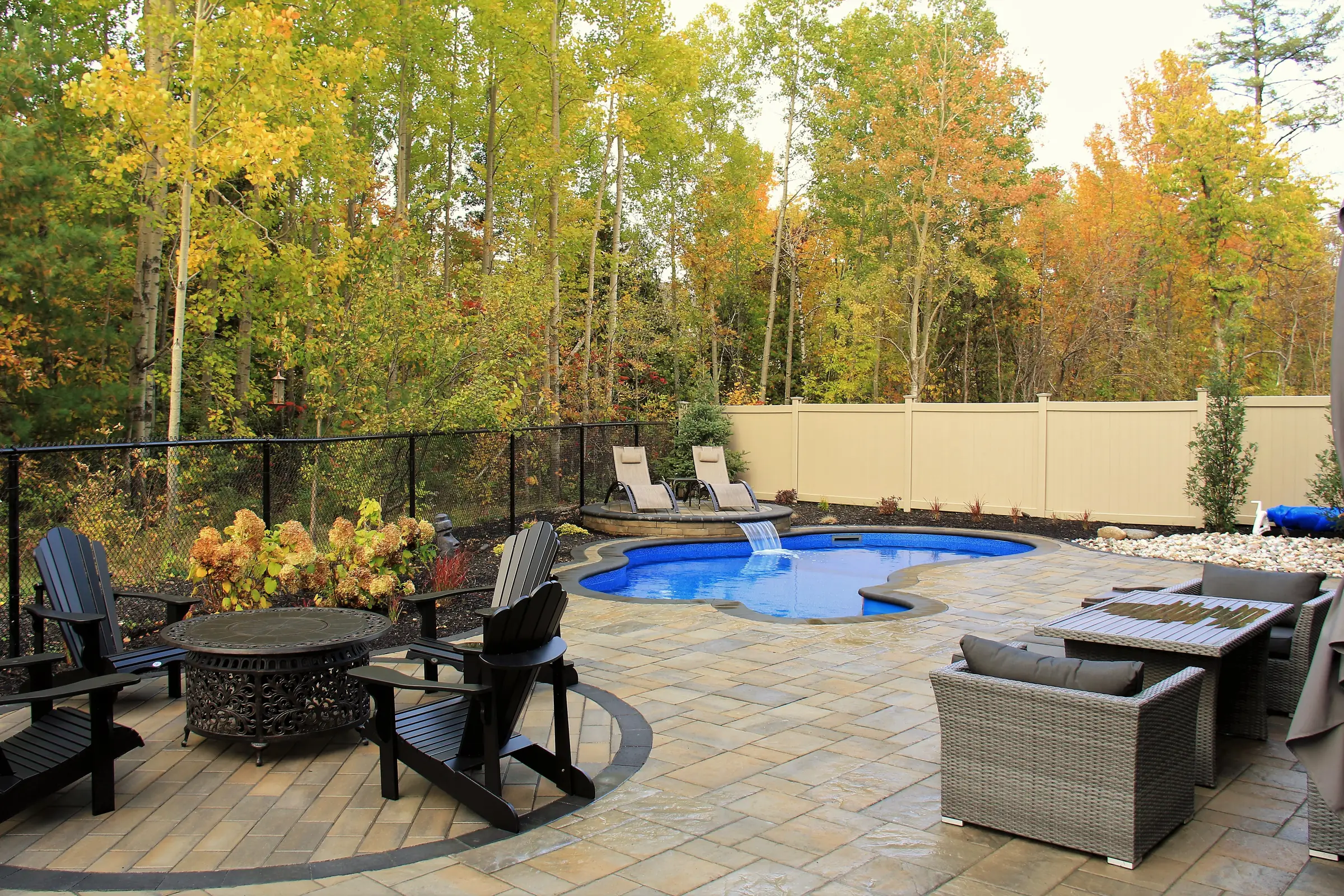
We replace vinyl liners in existing inground pools, and we build new vinyl liner pools on steel walls. The question we hear most from owners of older pools is simple: does my liner need replacing yet? There's no date on the calendar that answers it. A liner tells you when it's near the end, and most of the signs are easy to spot once you know what to look for. Here's how to read them, and what a replacement involves when the time comes.
How long does a pool liner last?
It depends, and anyone who gives you a fixed number without seeing the pool is guessing. Liner life comes down to a handful of things: how well the water chemistry has been kept, how much direct sun the pool gets, how the pool has been opened, closed and covered each year, how it's used, and the liner itself. Two identical pools on the same street can need new liners years apart. So instead of counting years, watch the liner.
Signs your liner is near the end
One sign on its own isn't always a reason to replace. Several at once usually are.
- Fading: sun and chlorine bleach the pattern over time, most often near the waterline and on the steps. Fading alone is cosmetic, but it shows the vinyl has been working hard.
- Wrinkles: a liner that has lost its stretch, or one that moved when the water level dropped, can fold and crease. Wrinkles on the floor are hard to brush, trap dirt and wear faster at the folds.
- Stains that won't lift: metal stains, algae marks and rings at the waterline that stay put after proper cleaning and balanced water often mean the vinyl surface itself has changed.
- Brittleness: new vinyl is soft and flexible. Old vinyl, especially above the waterline where it dries in the sun, can feel stiff or hard and may crack when pressed.
- Tears and holes: small punctures can often be patched. Splits along corners, steps or fittings, or tears in brittle vinyl, tend to come back.
- Liner pulling from the track: the top of the liner sits in a track under the coping. When it shrinks with age, it can pull out of that track in spots. Once it starts, it usually spreads.
- Water loss: if you keep topping up the pool more than evaporation would explain, there may be a leak in the liner or at a fitting.
How do I check for a leak?
Try the bucket test. Set a bucket on the pool step or on a stair in the shallow end, fill it with pool water so the level inside matches the pool, and mark both water levels. Turn off any auto-fill. Leave it for a day with the pump running as normal, then compare. If the pool drops noticeably more than the bucket, you're losing water beyond evaporation. Repeat the test with the pump off; if the loss changes, the leak may be in the plumbing rather than the liner.
A leak doesn't always mean a new liner. A single hole in sound vinyl can often be patched. A leak through vinyl that's already brittle, or a liner with several of the signs above, is a different story.
What Ottawa winters do to a liner
Our winters are hard on vinyl. The ground around the pool freezes and thaws through the fall and the spring, and that movement shows up at the walls, the floor and the coping. A few things make a real difference.
- Water level over winter: too low and the liner can shrink, dry out and pull from the track. The right level depends on the pool and the cover, so follow what your installer or service company recommends for your setup.
- The winter cover: a cover that fits well keeps debris and sun off the water. One that sags with water and snow can put strain on the liner and coping.
- Spring opening: the first look at the liner after the cover comes off is a good time to note new wrinkles, stains or gaps at the track.
Water left on the floor of an empty pool, or a pool drained without care, can also let the liner shift or the floor move. A vinyl pool should not be emptied without a plan.
What a liner replacement involves
In general terms, a replacement goes like this. We measure the pool carefully, because a new liner is made to fit that pool's walls, floor, depth and steps. The pool is drained, the old liner comes out, and the walls and floor are checked and repaired where needed. The new liner is set in the track, and water is added while the liner is drawn into place so it sits smooth. Fittings such as skimmers, returns and lights get new gaskets and faceplates.
How long it takes and what it costs depend on the pool, the condition of the walls and floor, and what else you decide to do at the same time. We estimate each job once we've seen the pool, so ask us and we'll tell you what yours involves.
Choosing a pattern and thickness
This is the fun part. Liners come in many patterns, from plain blues and greys to tile borders and stone looks. A darker liner makes the water look deeper and bluer; a lighter one looks brighter and more tropical. Look at samples outside in daylight, and if you can, in water, because colour changes a lot once it's under the surface.
Liners also come in different thicknesses. A thicker liner can hold up better to wear, while a standard liner may suit a pool that's used gently. We'll talk through the options available for your pool and what each suits.
Do other work at the same time
A drained pool is the easiest time to change things around it. Owners often use a liner replacement to:
- replace worn or loose coping, or change to a new stone,
- update steps or add a bench or ledge where the pool walls allow it,
- redo the patio and grades around the pool, fixing heaved stone and drainage that sends water back toward the pool,
- add lighting, a water feature or new planting.
Because we do the pool and the landscape from one plan, a liner job can turn into the update the whole yard needed. If you change or replace the fence or enclosure around the pool as part of that work, keep the City of Ottawa Pool Enclosure By-law in mind: replacing an enclosure needs a pool enclosure permit, and no water can go in the pool until the enclosure has been inspected and found compliant.
For day-to-day care that helps a new liner last, read our tips for maintaining and preventing damage to your pool liner. If you're weighing a new pool instead, our guide to fibreglass or vinyl liner pools compares the two.
Questions we hear
Can I just patch my liner instead?
Often, yes, if the vinyl is still soft and the damage is a small, clean hole. Patching a brittle liner tends to buy little time, because the vinyl around the patch keeps failing.
Can a liner be replaced without draining the pool?
No. The pool has to be drained to take out the old liner and set the new one, which is one reason to plan the work for the right time of year and to do other jobs while it's empty.
Will a new liner fit my older pool?
New liners are made to the pool's measurements, so an older pool can take a new liner as long as the walls, floor and track are sound. We check those during the measure.
When should I book a replacement?
If you see the signs in the fall, plan through the winter and book early for the next season, so the measure and the liner are ready when the ground allows the work.
See our pool liner replacement service, or call (613) 410-8157, Monday to Friday, 9am to 5pm. Send a few photos of the liner, the waterline and the coping, and we'll tell you what we see.