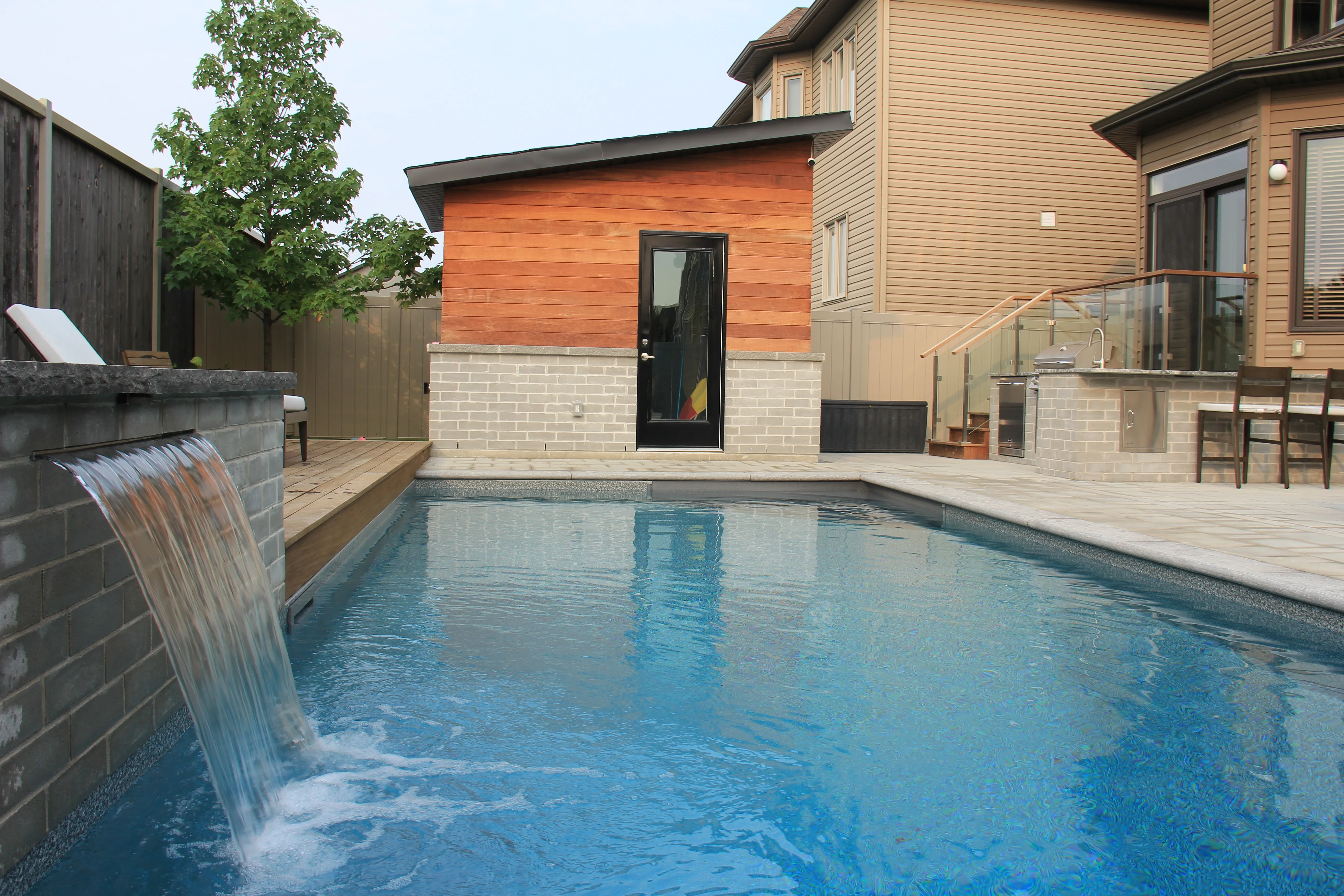
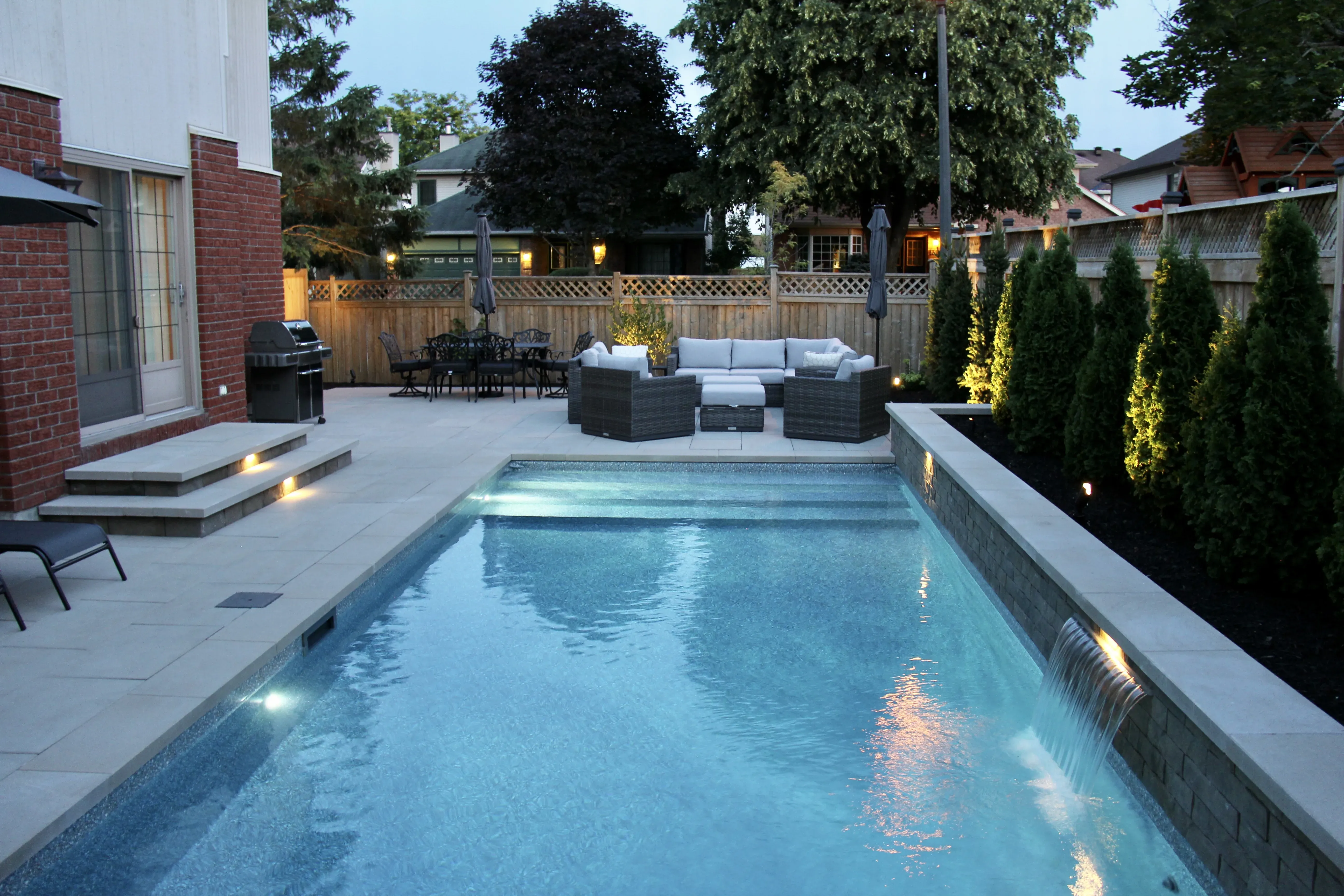
Mickelberry Hangout: an Ottawa pool setting
Water features
Pool water features in Ottawa
A sheet of water falling from a stone wall changes how a pool sounds and looks, from the patio and from the house. We design waterfalls, spouts and fire and water features as part of the pool, not as an add-on.
- Designed with the pool, from the first drawing
- Pool and stone crews in-house
- An award-winning construction and design team
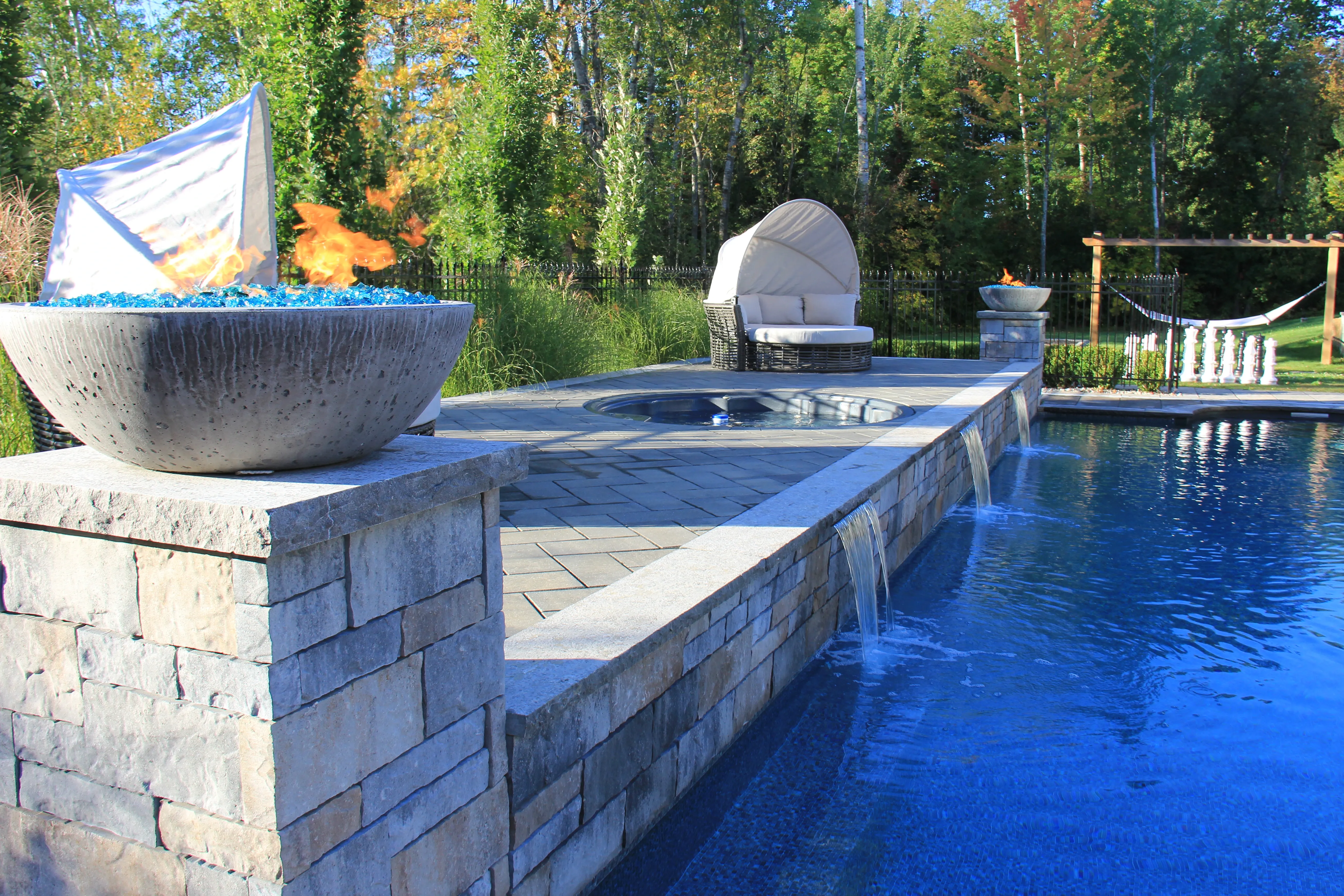
Osmond Daly Estate: fire and water on one wall
Part of the pool plan
Planned before the pool is dug
A water feature needs a wall to sit in, plumbing to feed it, a pump to drive it and a place where the falling water looks right. Those things are easiest to get right when they are drawn with the pool.
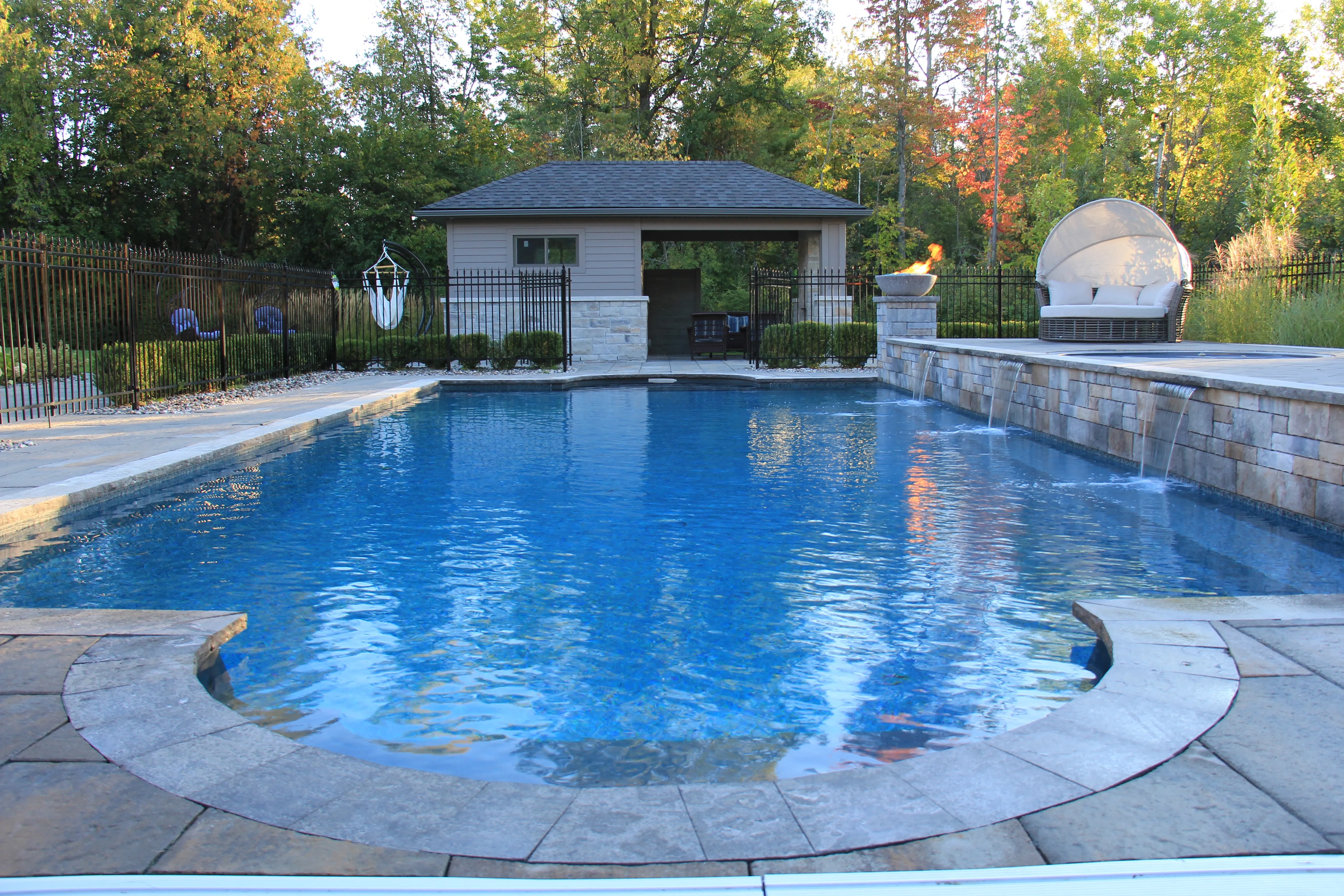
Our designers place the feature where you will see it from the house and the patio, and our crews build the pool, the stone and the plumbing as one job. Edgewater Pools is the pool division of Jonathan Robert Landscapes, so the stonework is done in-house too.See the Osmond Daly Estate project
If you have a pool already and want a feature added, send photos. What is possible depends on the pool, its equipment and the space beside it, so we look before we suggest anything.
Types of water features
Four ways to bring moving water to the pool
Each one sounds and looks different. Choose by the effect you want from where you sit most.
- 01
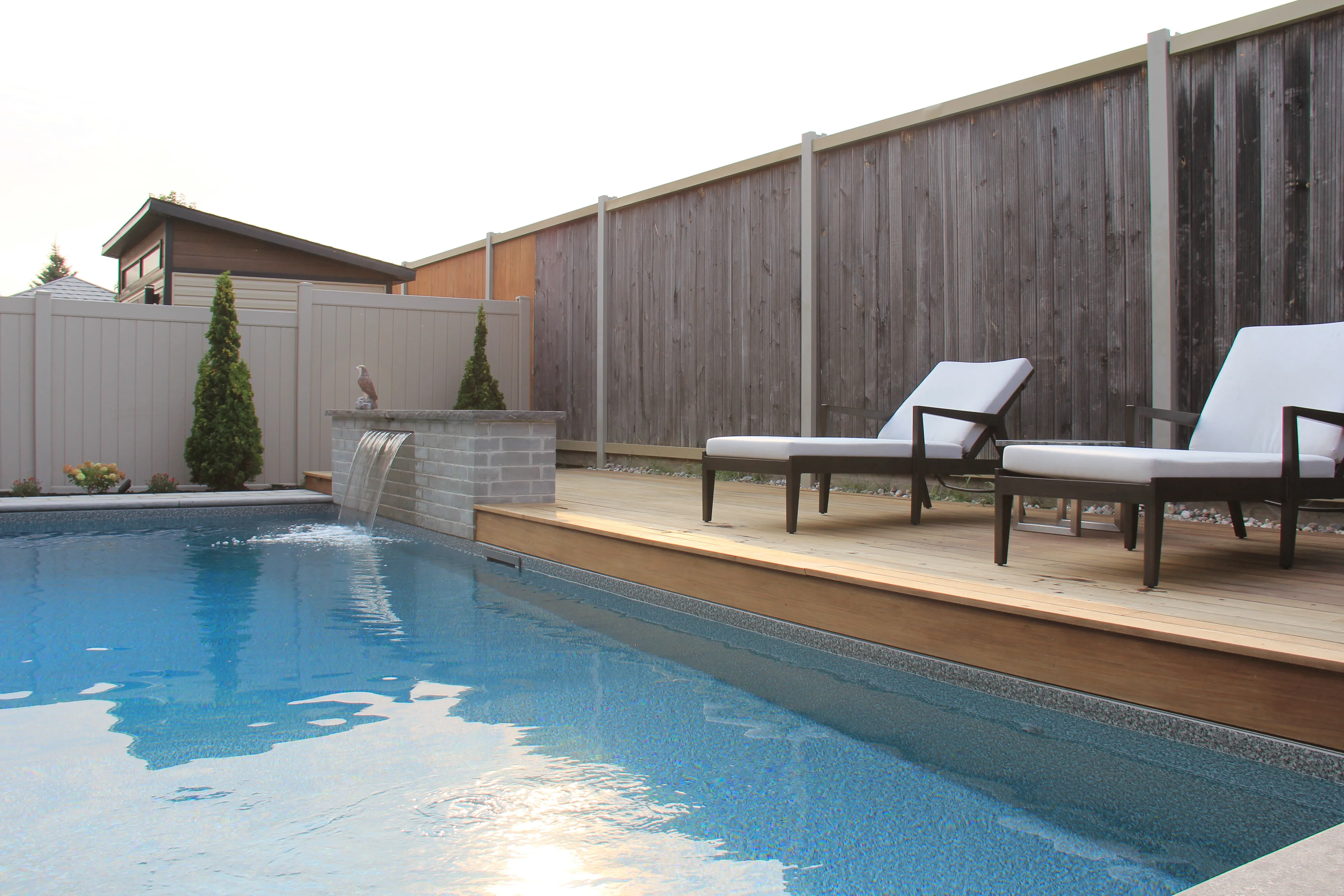
Sheer waterfalls
A clean, flat sheet of water from a slot in a wall or a ledge. One sheer fall reads as calm; a row of them along a wall makes the end of the pool a focal point.
See the Mickelberry Hangout waterfall - 02
Wall spouts
Water leaves the wall in a stream and lands further out in the pool. Spouts are livelier and make more splash than a sheer fall, and work well in a compact pool.
- 03
Raised stone walls
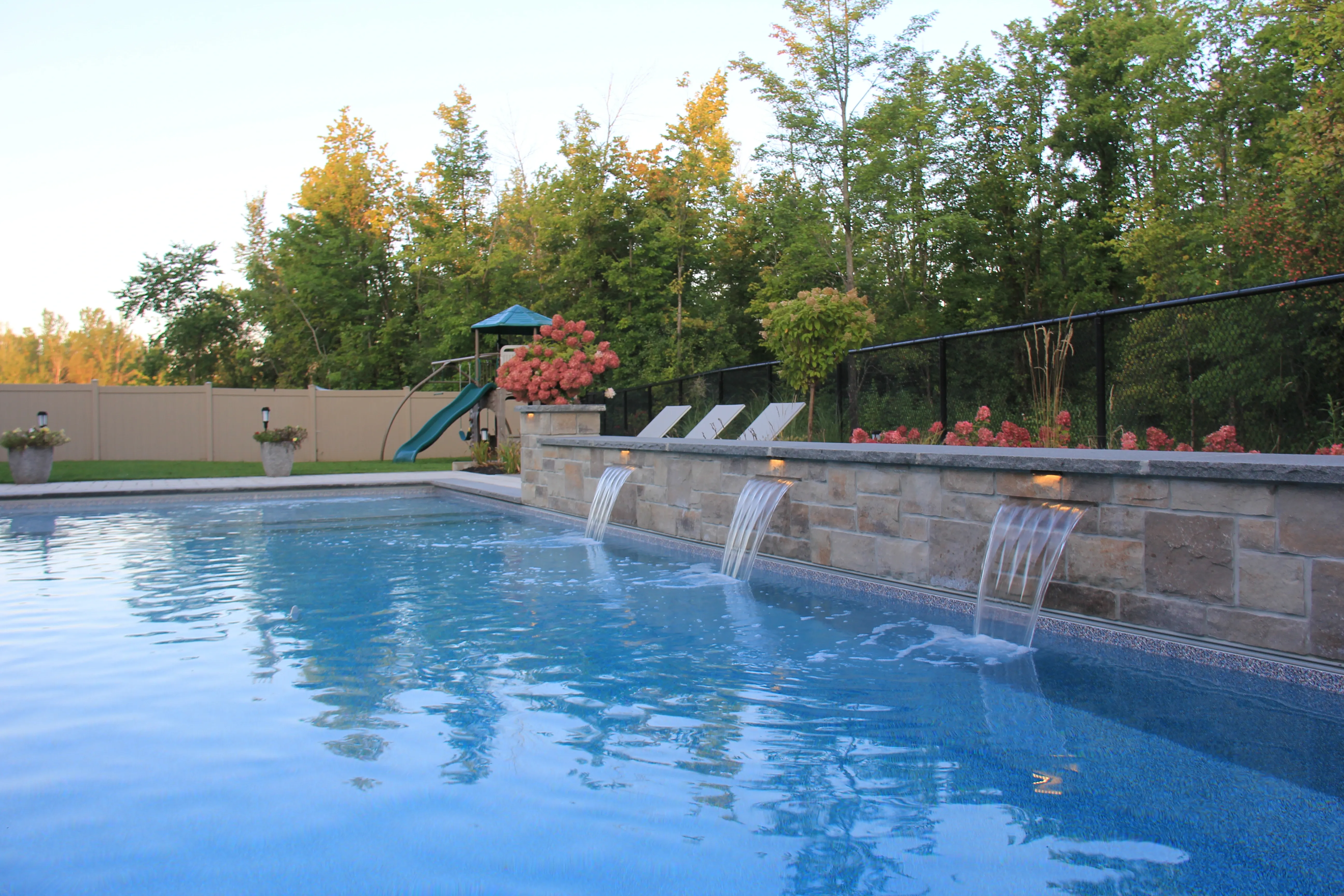
A raised wall along one side of the pool gives the feature a home, adds a ledge to sit on and screens the view beyond. Spouts or sheer falls can be set into it at even spacing.
See the Astrolabe Ravine wall - 04
Fire and water
Fire bowls on stone pillars at the ends of a waterfall wall put flame and falling water side by side. They are planned with the gas line and the wall at the same time.
See fire and water at Osmond Daly
Decide what you want to hear and see
Before choosing a style, think about the effect from the places you will actually be: the kitchen window, the patio table, the loungers, the bedroom upstairs. A water feature is seen far more often than it is swum beside.
We work through these with you on the drawing, before the wall is built.
- Sound: a sheet falling a short distance is soft and steady; spouts landing further out are louder and splashier.
- View: place the feature where it is in line with a window or the main seating, not behind the people using it.
- Light: a light in or under the fall makes the water glow at dusk, when most evenings by the pool begin.
- Control: features can run only when you want them, so you can turn the sound off for a quiet evening.
- Splash: a spout that lands near the steps or the edge of the patio will wet whoever is sitting there.
Equipment and plumbing, planned with the pool
A water feature adds pipes and often its own pump. It needs a route from the equipment to the wall and a place for that equipment away from the seating. Planning it with the pool keeps the plumbing inside the wall and under the patio, instead of running it after the stone is laid.
Raised walls also need a proper footing, since Ottawa ground freezes and thaws. The wall is drawn and built with the pool shell and the patio, so they move together.
How it looks in winter
The water feature is off and the pool is covered for a good part of the year in Ottawa. A raised stone wall, the pillars and the coping still give the yard shape under snow, and they are what you see from the window from November to April.
That is one reason we favour features built into stone walls over pieces that sit on the patio. The wall works as a garden wall when the water is off.
How it works
From an idea to falling water
The feature follows the same stages as the pool, because it is built as part of it.
- 01
Consultation
We talk about the effect you want, where you sit and what you see from the house.
- 02
Site review
We note grades, sight lines from the house, access and where the equipment could go.
- 03
Pool and feature design
The pool, wall, feature, lighting and equipment are drawn together to scale and reviewed with you.
- 04
Planning and coordination
We confirm the stone, the feature fittings, the plumbing route and the order of work.
- 05
Build and handoff
Our crews build the pool, the wall and the plumbing from the approved plan, then show you how to run the feature.
Common questions
Before you start
What is the difference between a sheer waterfall and a wall spout?
A sheer waterfall is a flat, clean sheet of water from a slot or ledge, and it falls close to the wall with a soft sound. A spout throws a stream further into the pool, which looks livelier and makes more splash and noise.
Can a water feature be added to my existing pool?
Sometimes. It depends on the pool, its equipment and the space beside it for a wall and plumbing. Send photos of the pool, the equipment and the area around it, and we will tell you what we see after a visit.
Will a water feature be noisy?
It depends on the type, the height of the fall and where it lands. We talk through the sound you want during design, and a feature can be turned off when you want a quiet evening.
Can you combine fire and water?
Yes. Fire bowls on stone pillars beside a waterfall wall are one way to do it. They are planned with the wall, the gas supply and the seating so they work together.
What happens to the water feature in winter?
It is shut down with the pool for the cold months. The stone wall and pillars stay in view, which is why we design them to look good under snow as well.
How much does a pool water feature cost?
It depends on the type of feature, the length and height of any wall, the stone, the lighting and the plumbing. Each project is estimated from its own approved design, so ask us once you have an idea of what you want.
Start with the view
Where would you like to see the water fall?
Send the address, a few photos of the yard and the view from your back windows, and a note on the feature you have in mind.